Human-Centred AI Masters (HCAIM) & Blended Intensive Programme in Utrecht
- Period
- Dec 2022 – Feb 2023 · 3 mos
- Organisation
 HU University of Applied Sciences Utrecht · BME
- Location
- HU University of Applied Sciences UtrechtHeidelberglaan 15, 3584 CS Utrecht, the Netherlands
- Posted
Complementary EU-defined programme in human-centred AI alongside my MSc, including an international intensive week in Utrecht: thesis topics from industry product owners, challenge-based team assessments, peer-reviewed pitches and a poster presentation.
- Research in Practice: Boost Your Research Proposal (BIP course, 3 ECTS, credited towards the MSc)
- Thesis topics proposed by industry product owners, pitched and peer-reviewed
- Challenge-based assessments in mixed-nationality teams, including dataset balance and bias
- Poster on applied explainable AI, with peer evaluation
Alongside my MSc I completed the Human-Centred Artificial Intelligence Masters (HCAIM) programme, a complementary curriculum defined by the EU project INEA/CEF/ICT/A2020/2267304. It covers the questions that come with deploying AI, namely explainability, interpretability, fairness and bias, and the ethical and safety concerns of new AI technologies. BME recorded it on my MSc transcript as an additional specialisation and confirmed in January 2024 that I had met all its learning outcomes.
The Blended Intensive Programme
Part of the programme was the Blended Intensive Programme "Research in Practice: Boost Your Research Proposal" at the HU University of Applied Sciences Utrecht. BME credited it towards my MSc as a 3-credit free elective studied abroad.
The programme was built around thesis topics proposed by product owners, practitioners from industry with academic interests who were looking for possible collaborations. Each student picked a topic and, over a few weeks online and one week in Utrecht, turned it into a research proposal, a three-minute pitch and a poster.
Preparation online
The product owners published their final list of thesis proposals in November and held question sessions about them. The online phase started for us on 12 December 2022: each student sent in a list of three preferred topics and did some first literature research on them. Before the week, HU scheduled everyone into break-out rooms for the product owners' presentations.
The week in Utrecht
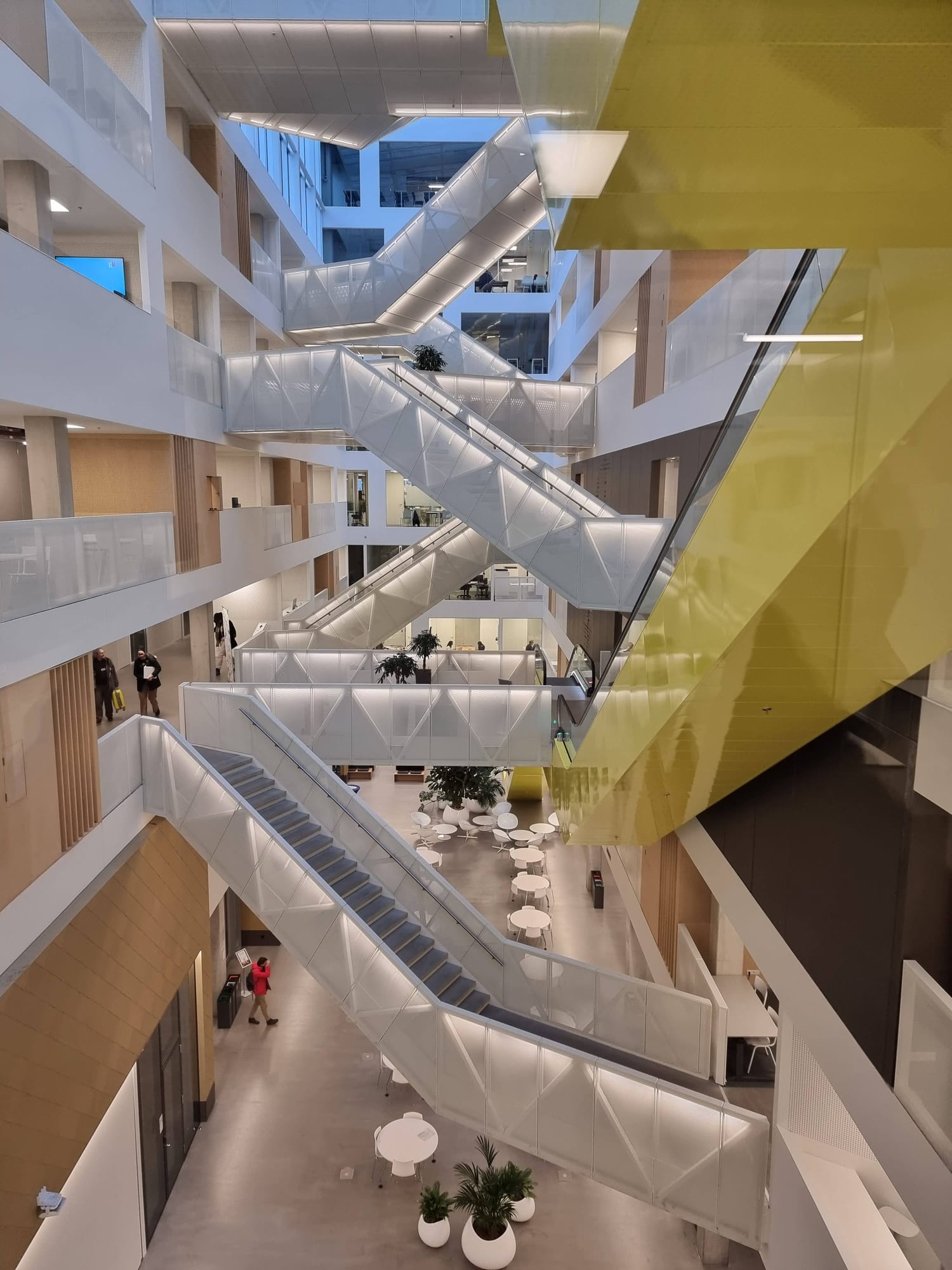
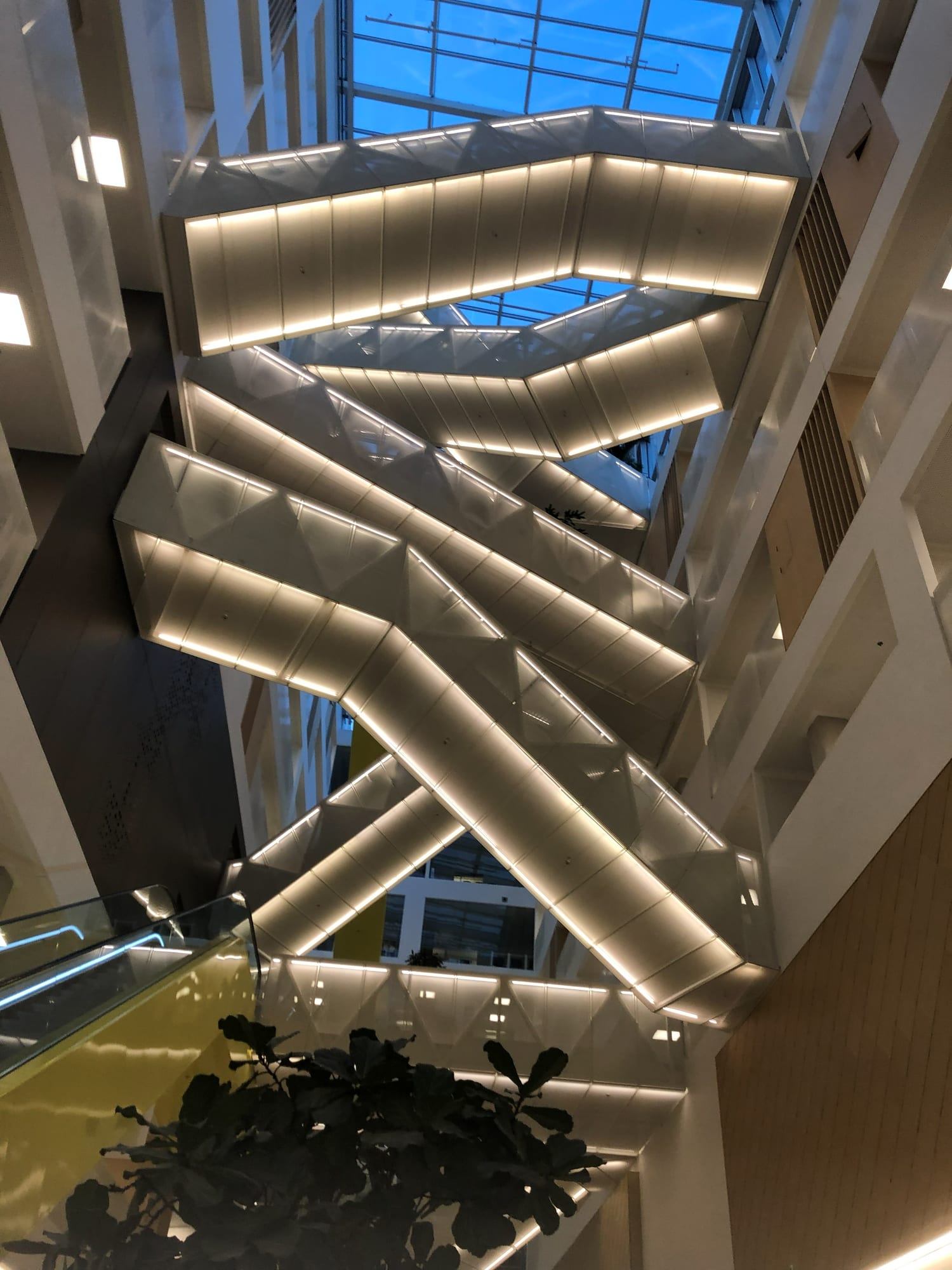
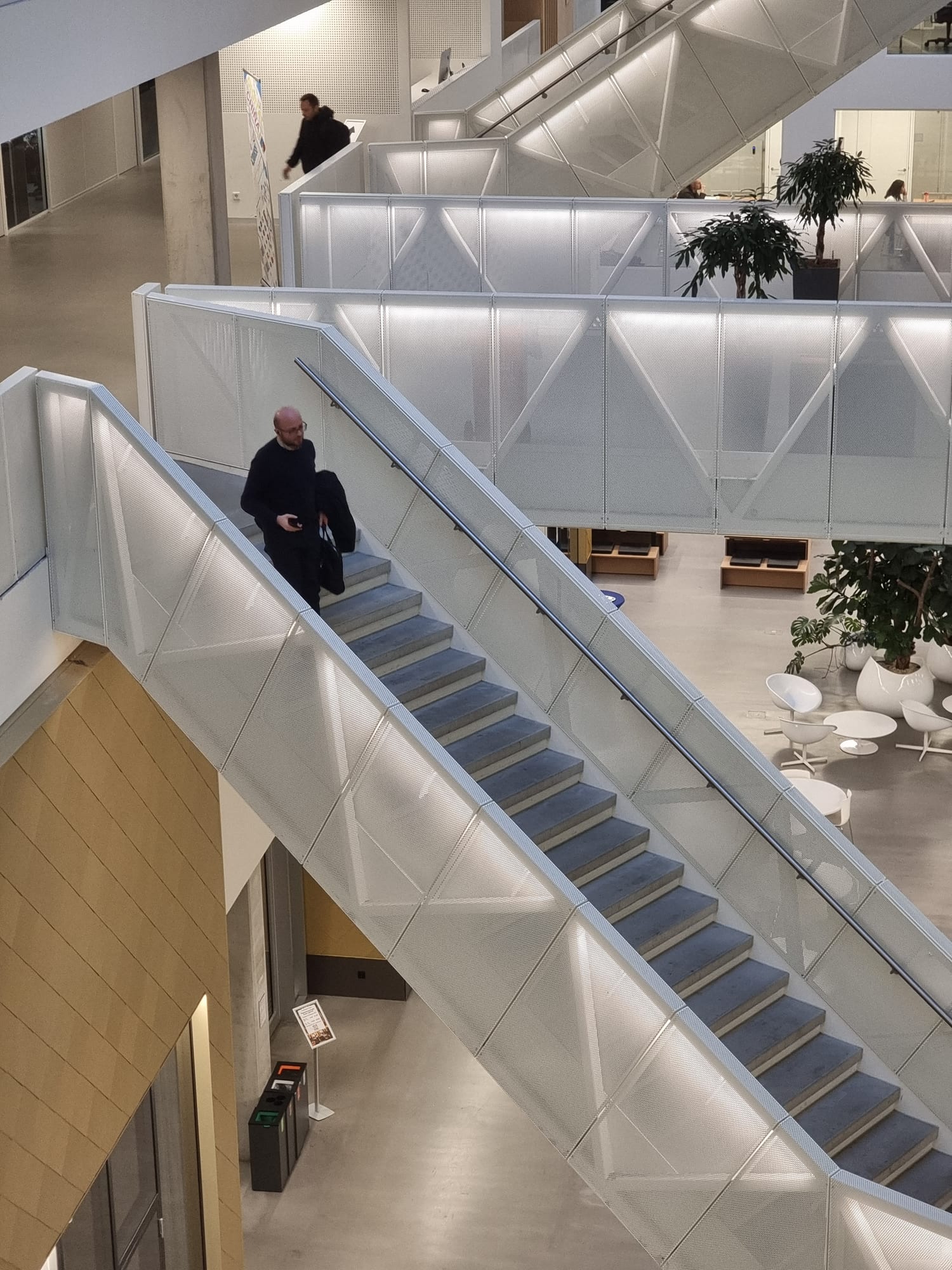
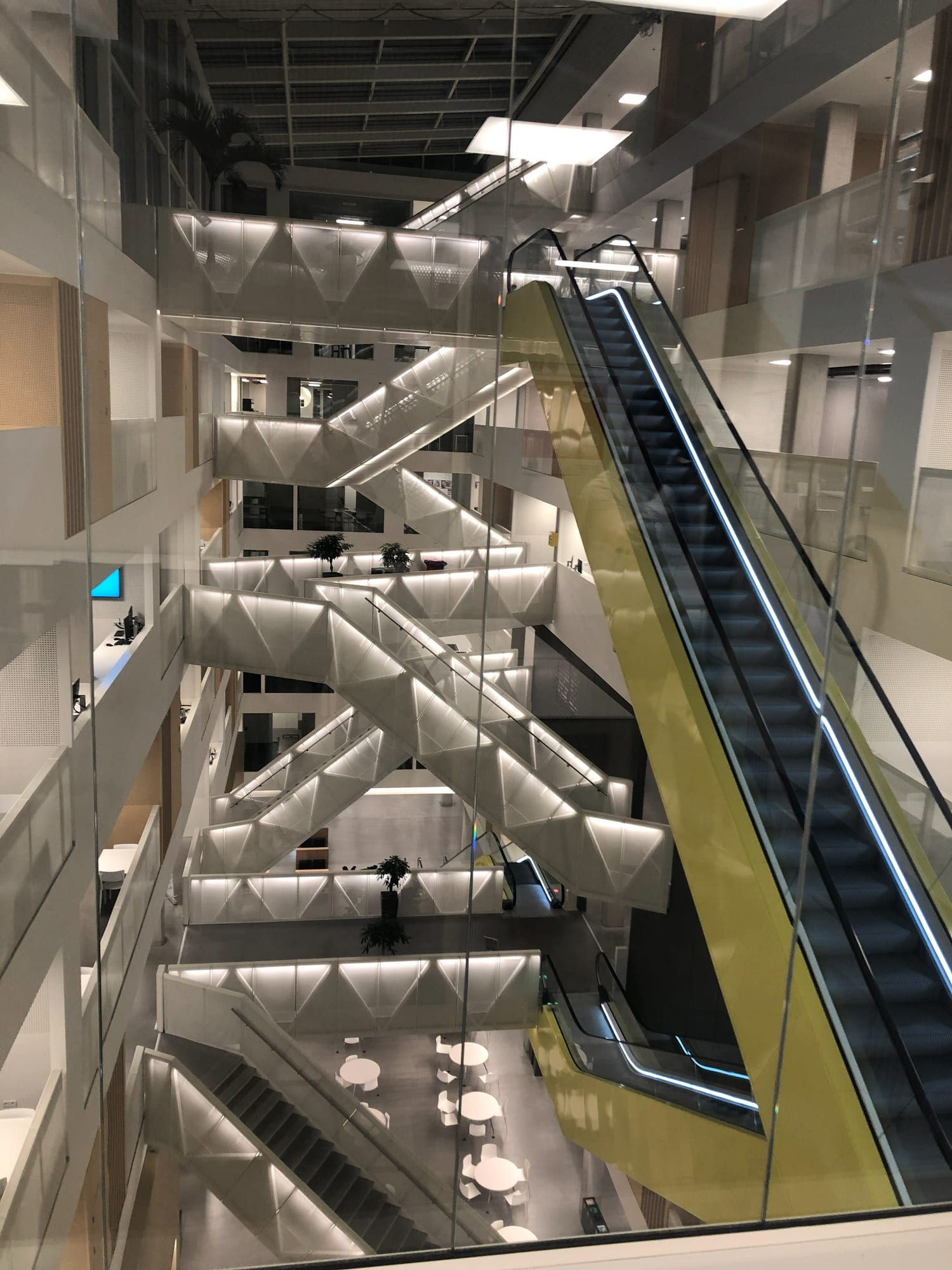
The physical week ran from 30 January to 3 February 2023, in an HU building organised around a tall atrium of criss-crossing staircases.
- Monday: meeting the product owners. After the welcome came break-out sessions with the product owners, grouped by theme, where we chose our thesis topics. In the afternoon Mihály Héder lectured on the ethical aspects of the topics, and the day ended with a diner pensant, a working dinner with students and lecturers.
- Tuesday: challenge-based assessments. A whole day of two or three different challenges, solved in teams of two or three students of mixed nationalities. One was a dataset-balance analysis task, looking at how imbalance and bias in data change the decisions of AI models.
- Wednesday: diving deeper into the topics. Speed dates with the companies in the morning, then workshops and brainstorming sessions on the projects, where we drafted the first version of our pitch and poster.
- Thursday: peer review. A morning feedback session in which we reviewed each other's pitches, followed by an external excursion for the rest of the day.
- Friday: posters and closing. We finalised and printed the posters in the morning and presented them in the afternoon to the other HCAIM students, the lecturers, the product owners, and students and lecturers from HU's HBO-ICT programme. Everyone evaluated the posters against a shared set of criteria, and a closing event with food and drinks ended the week.
My poster
The posters built on our research into the main branches of human-centred AI and their open problems. Mine, Applied Explainable Artificial Intelligence, was a research proposal on explainable AI (XAI) in practice. It compared state-of-the-art XAI tools (ELI5, LIME, SHAP and Captum) by scope (local or global), methodology (backpropagation or perturbation) and usage (intrinsic or post-hoc), and proposed a method that lets end users bind their own models to the post-hoc tools that explain them best.
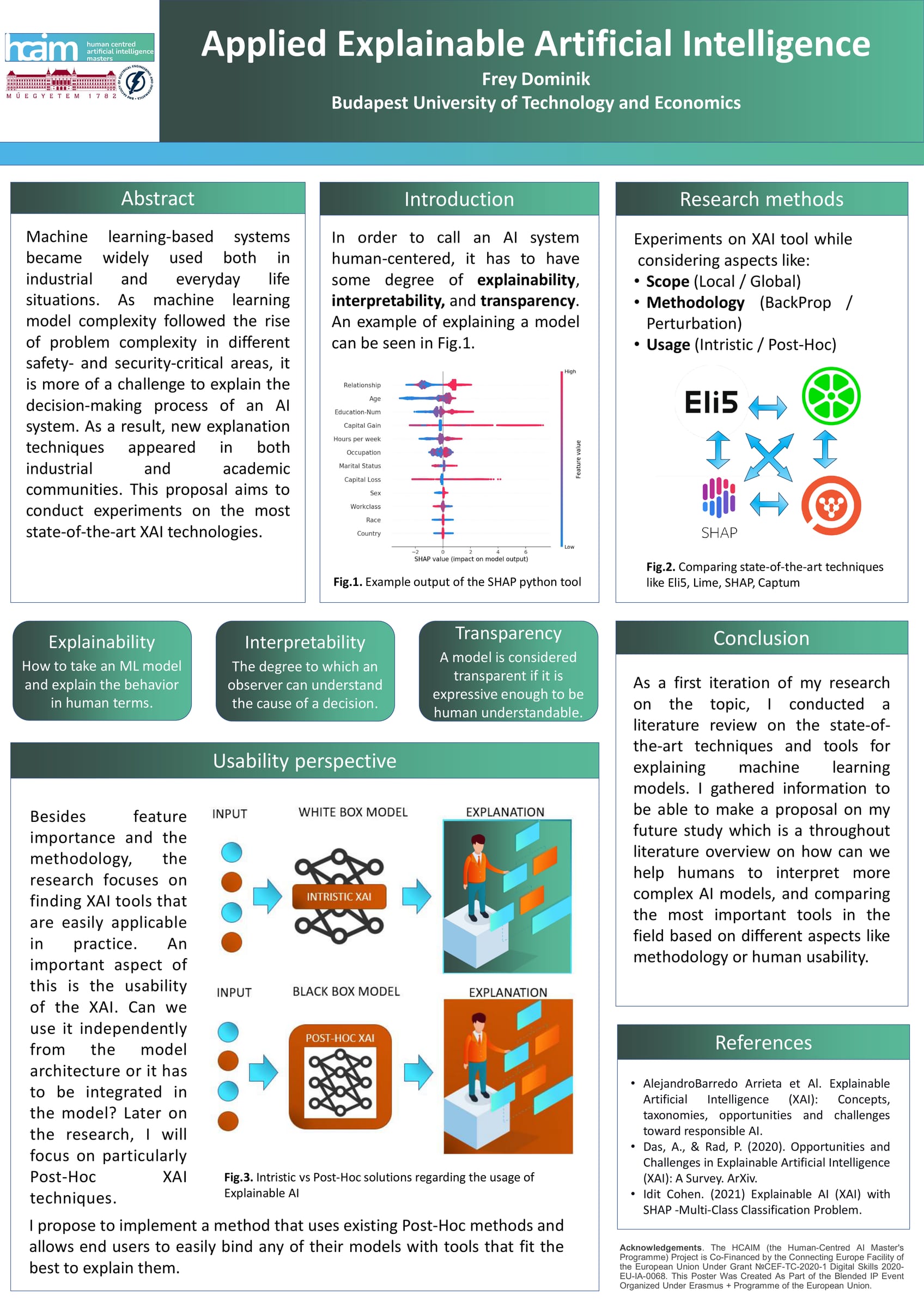
For me the week was mostly practice in English-language research communication: pitching an idea, making a poster that people actually read, and giving structured feedback.
Gallery
References
- Human-Centred Artificial Intelligence Masters (HCAIM), EU project INEA/CEF/ICT/A2020/2267304. hcaim.bme.hu/en/bip/