WASP International Study Trip to Singapore 2026
- Period
- 21–28 Mar 2026
- Location
- Nanyang Technological University50 Nanyang Avenue, Singapore 639798National University of Singapore21 Lower Kent Ridge Road, Singapore 119077
- Posted

A week in Singapore with WASP's international study trip for PhD students: research talks and lab tours at NTU and NUS, the Port of Singapore, A*STAR, and a reception at the Swedish Ambassador's Residence.
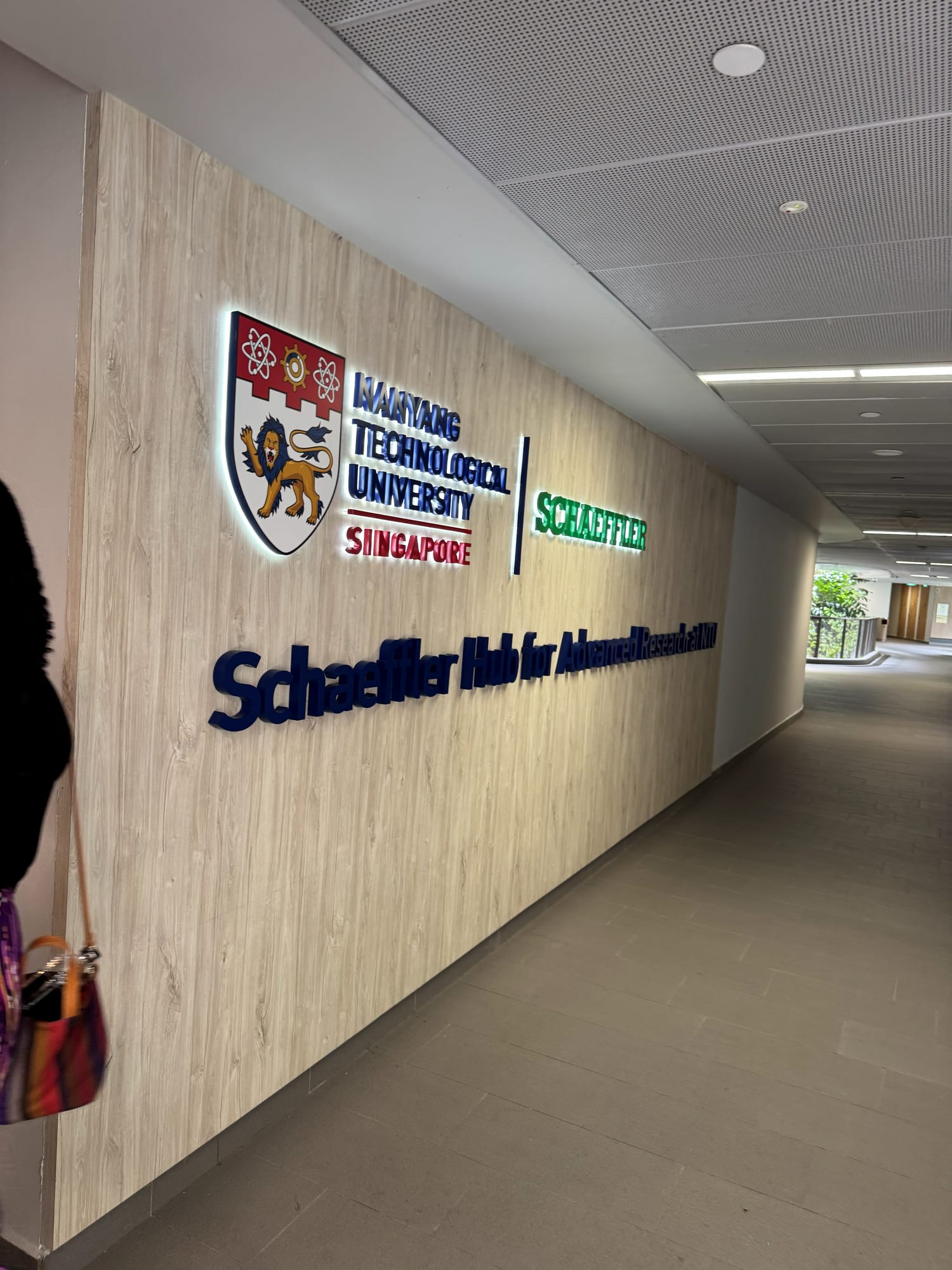
- Lab tours at NTU's Schaeffler, Alibaba and Delta corporate labs
- Demos and a joint poster session at the NUS AI Lab
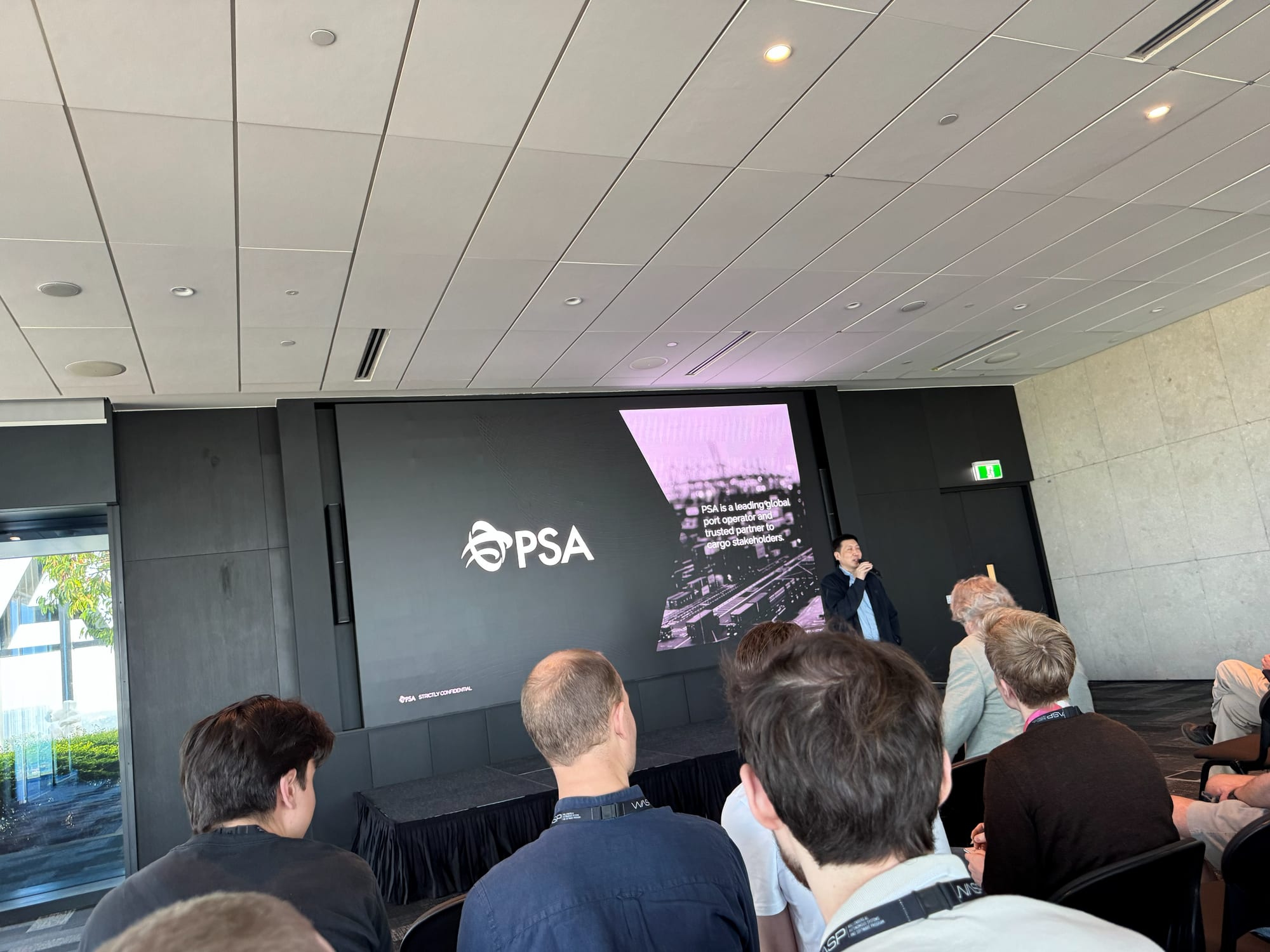
- Visit to the Port of Singapore Authority (PSA)
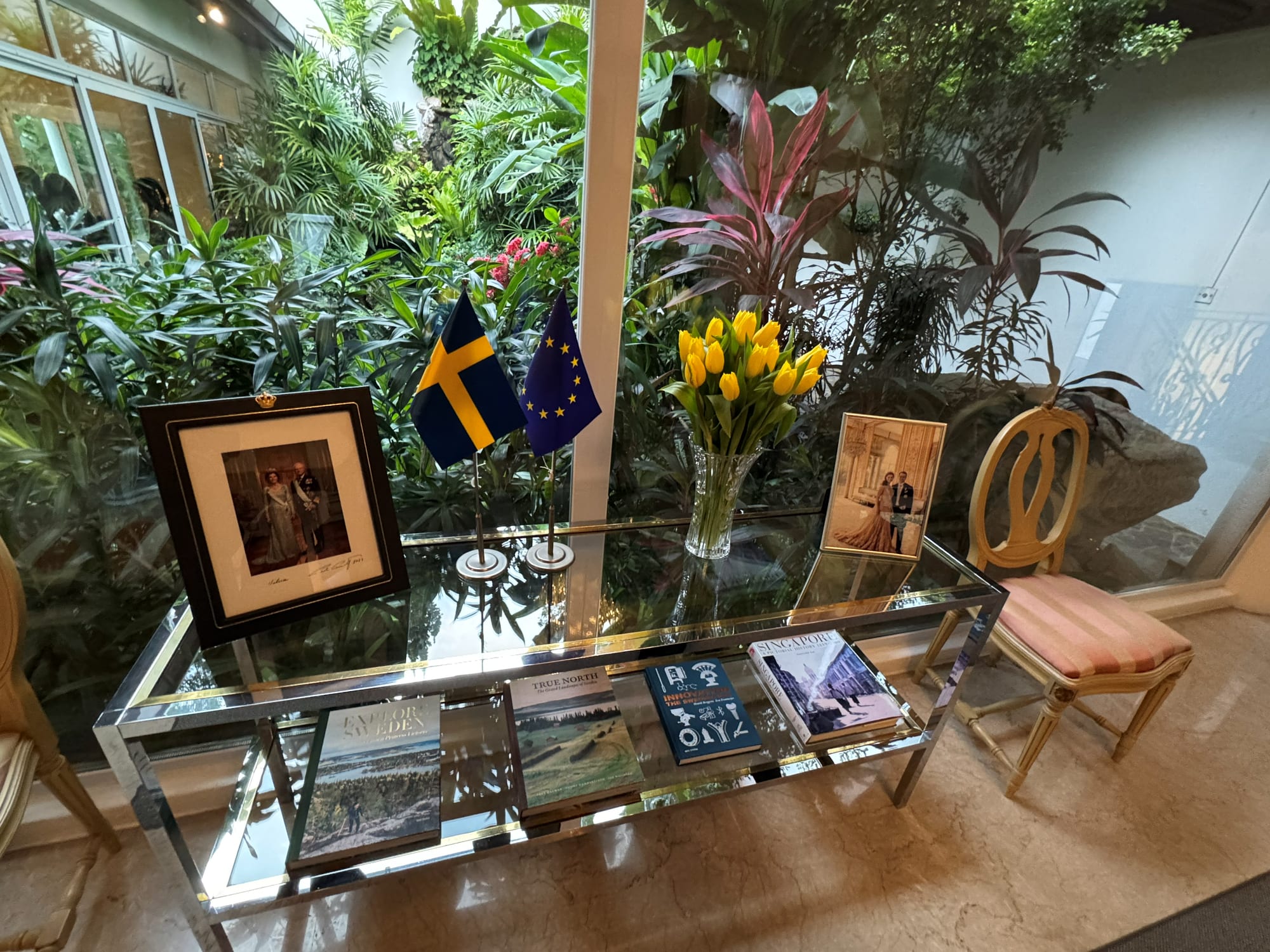
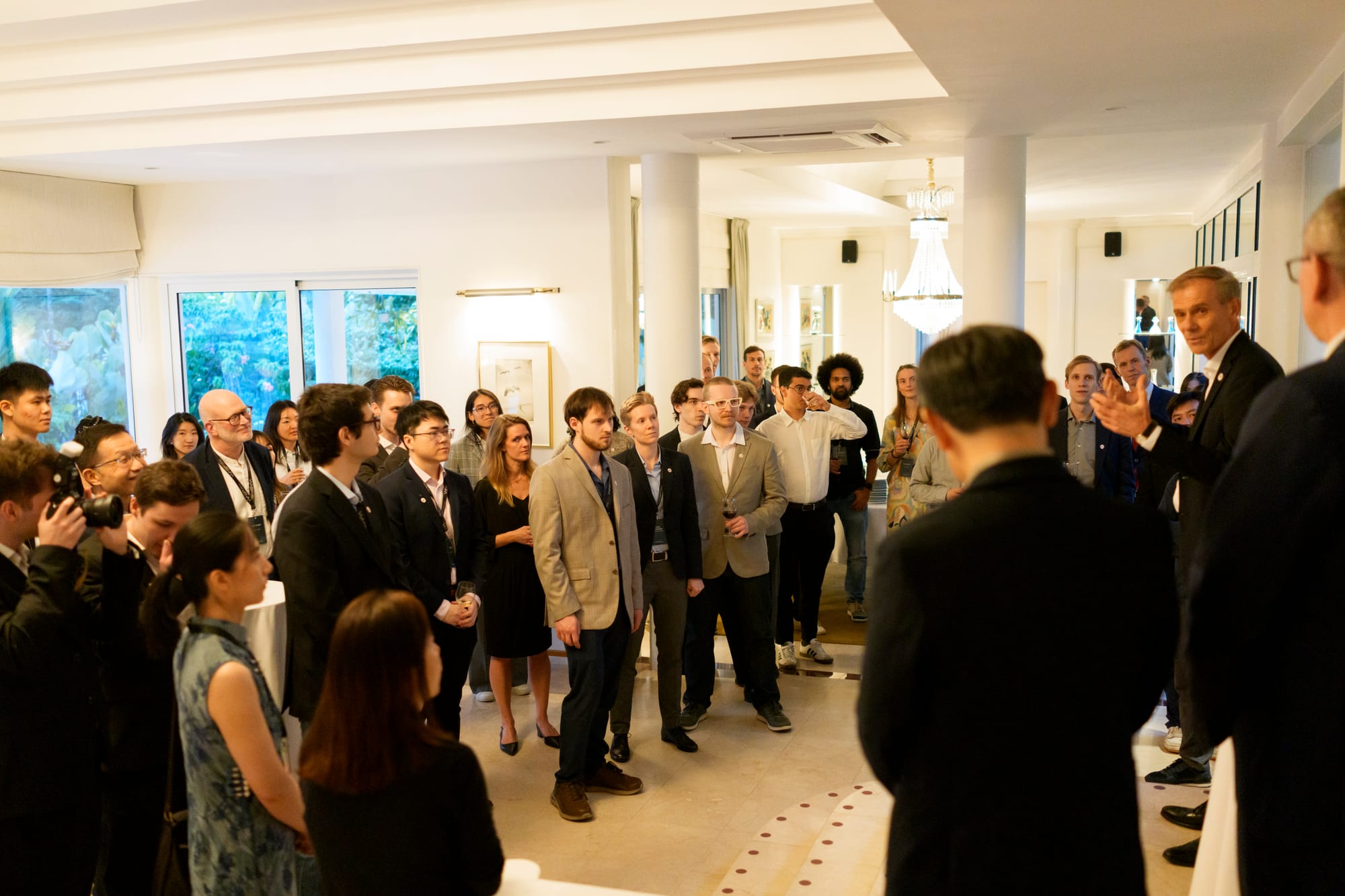
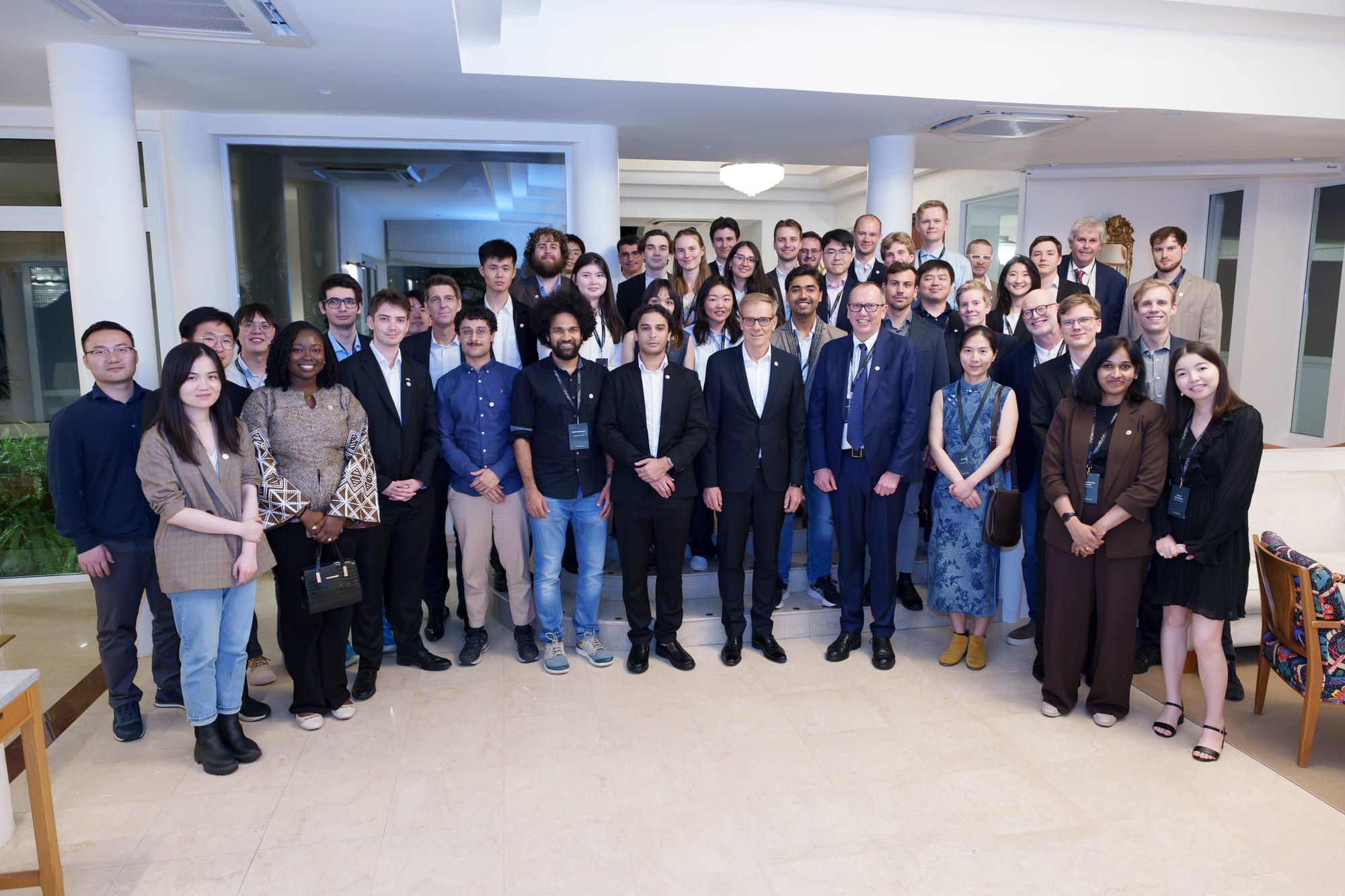
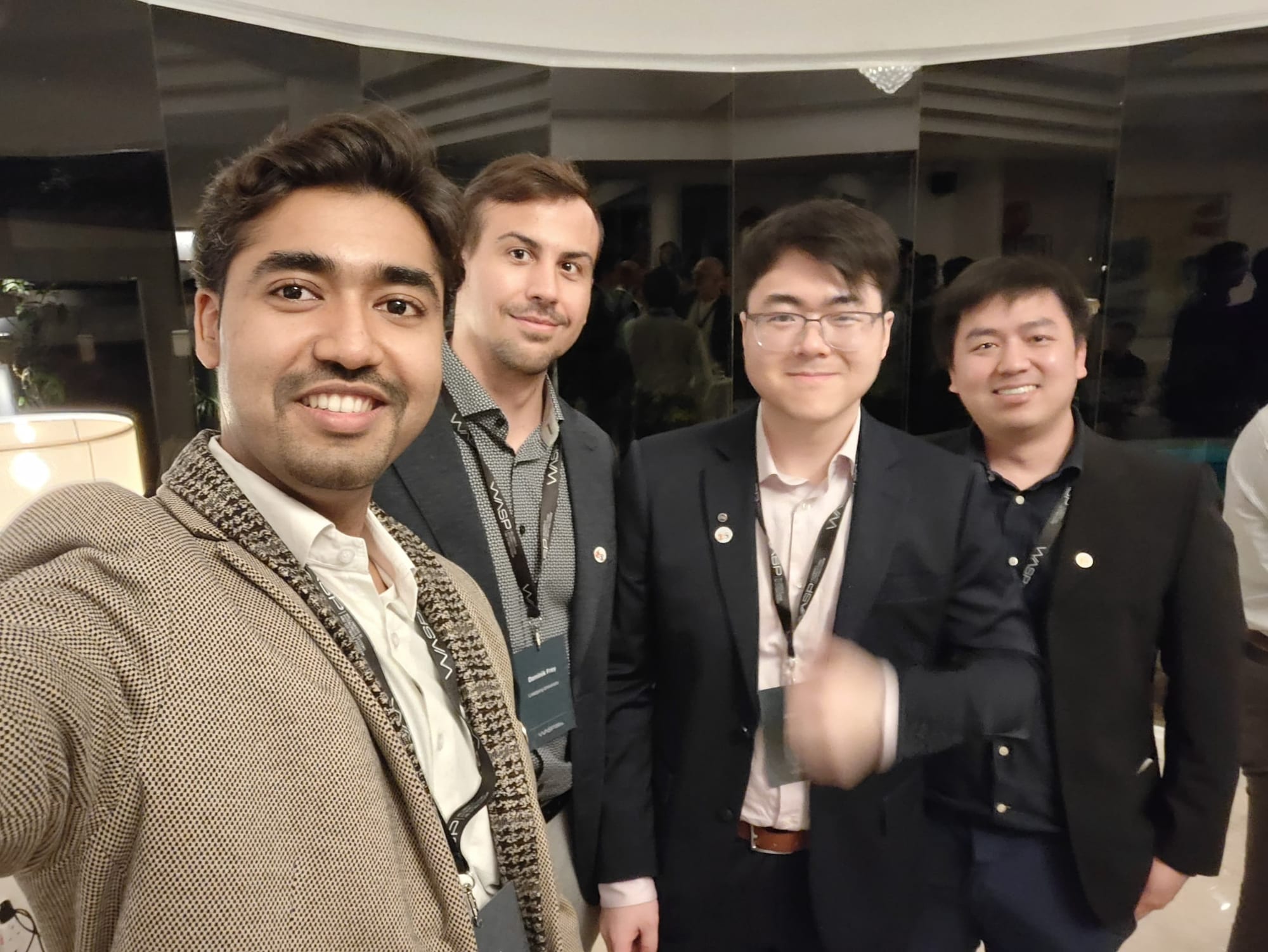
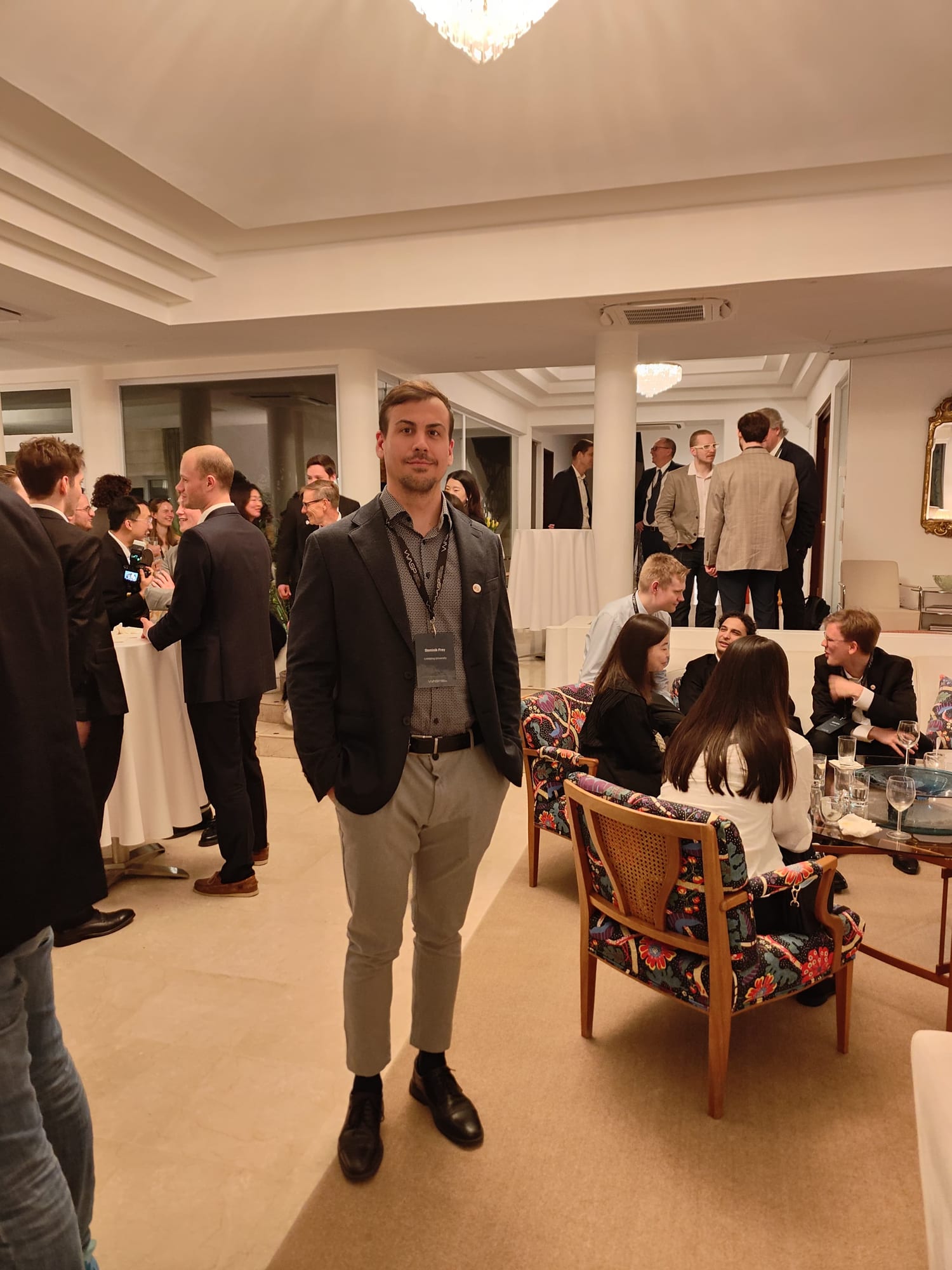
- Reception at the Swedish Ambassador's Residence
WASP runs two international study trips a year for its PhD students, one in Europe and one overseas, so that we can see how AI and autonomous-systems research is done elsewhere. In 2026 the choice was between Northern Great Britain and Singapore. I went to Singapore, from 21 to 28 March, which suited someone working on maritime autonomy: it has one of the busiest ports in the world.
The trip was organised by Bo Wahlberg (KTH), Karl-Erik Årzén (Lund University), Hui Han (Luleå University of Technology) and Volker Krüger (Lund University). These are the parts of the programme I found most interesting.
Nanyang Technological University
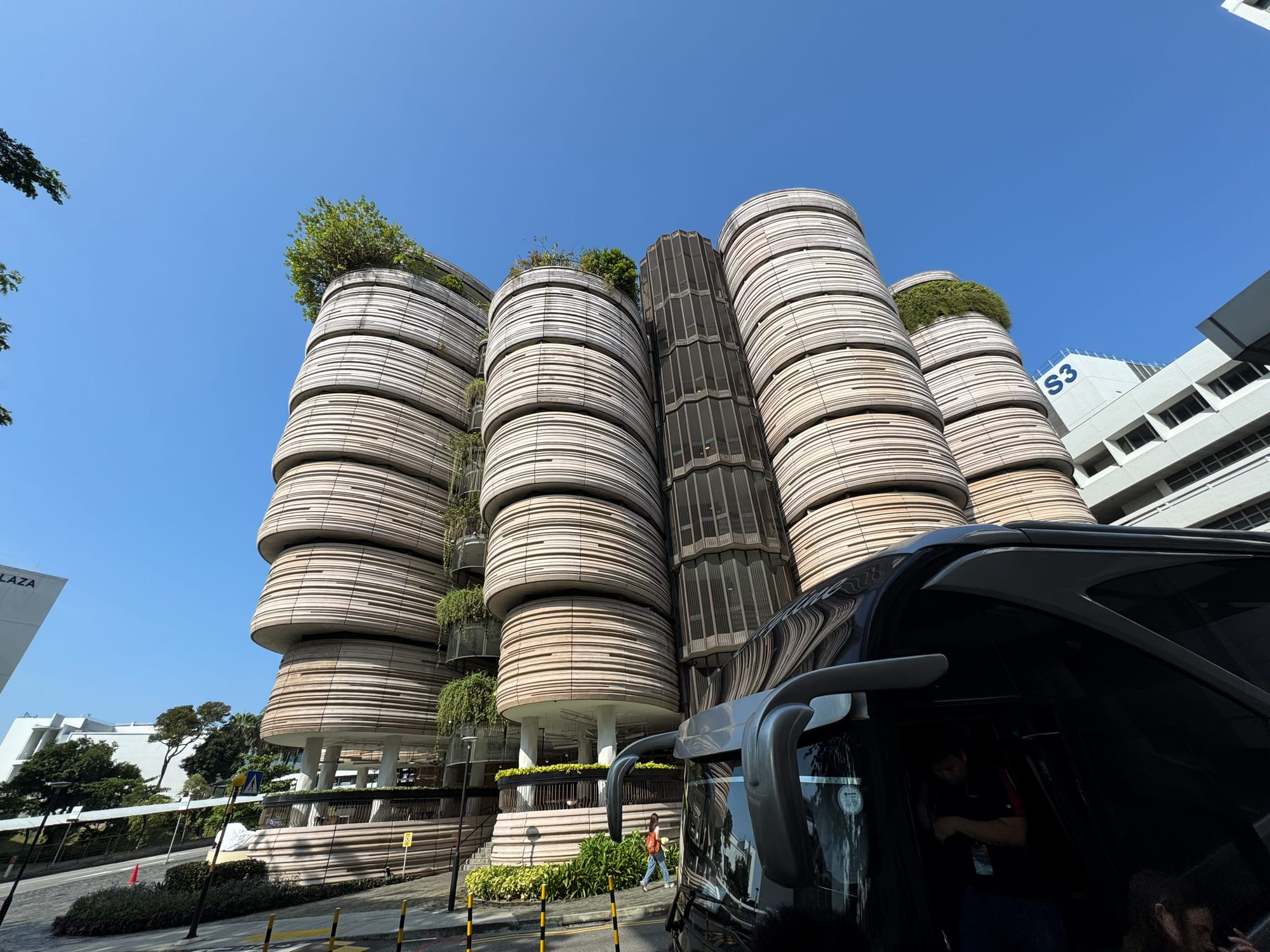
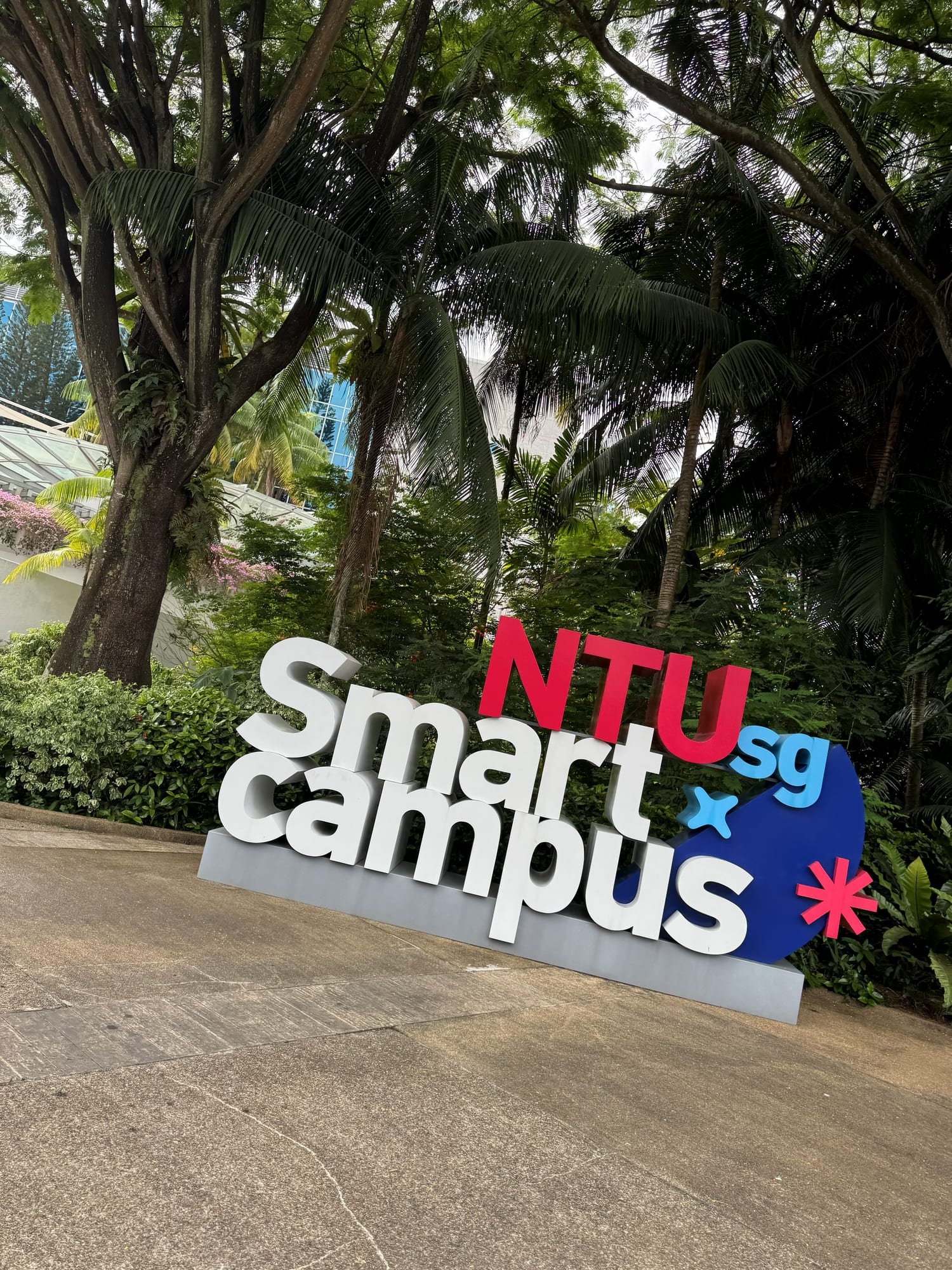
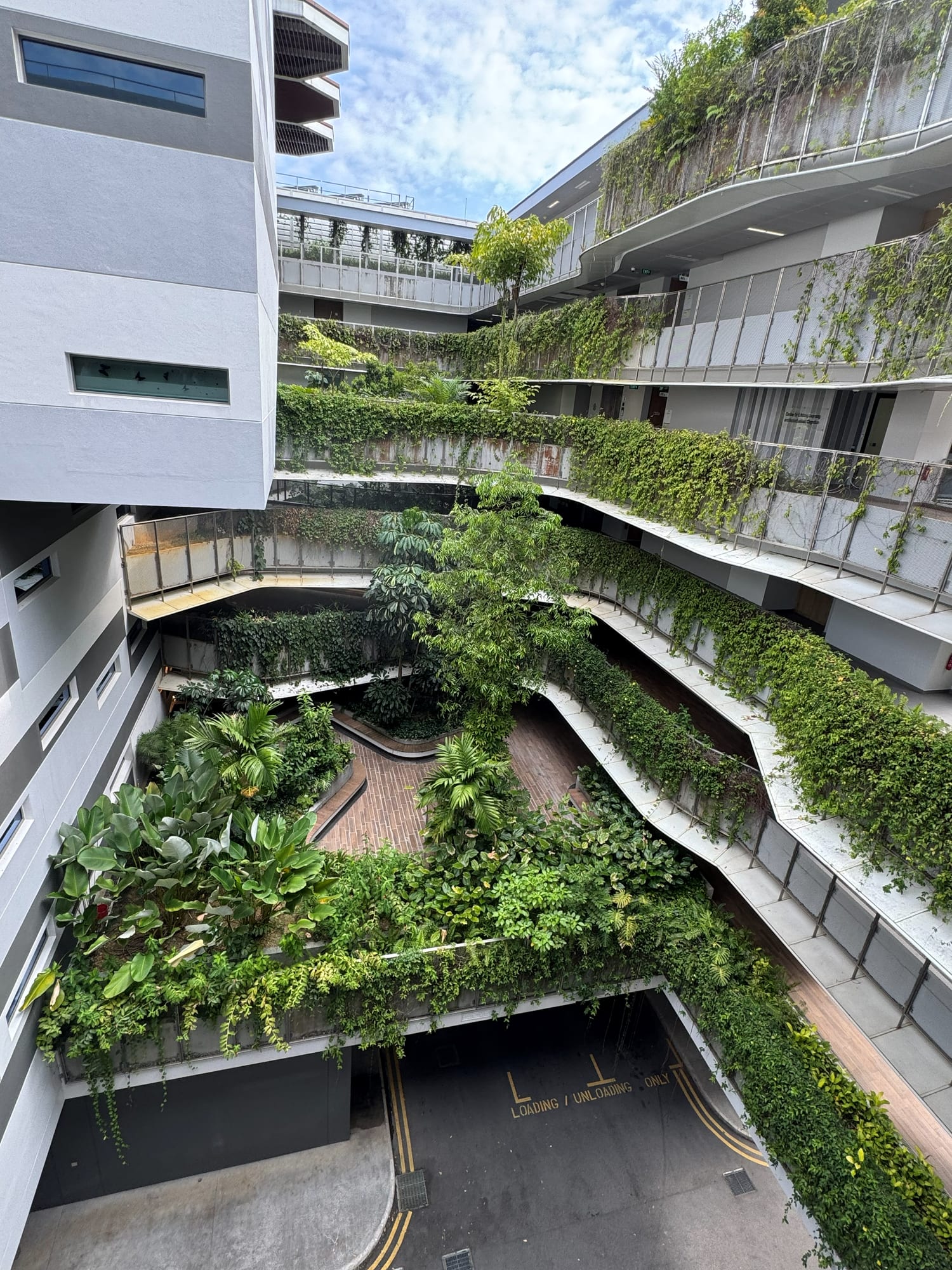
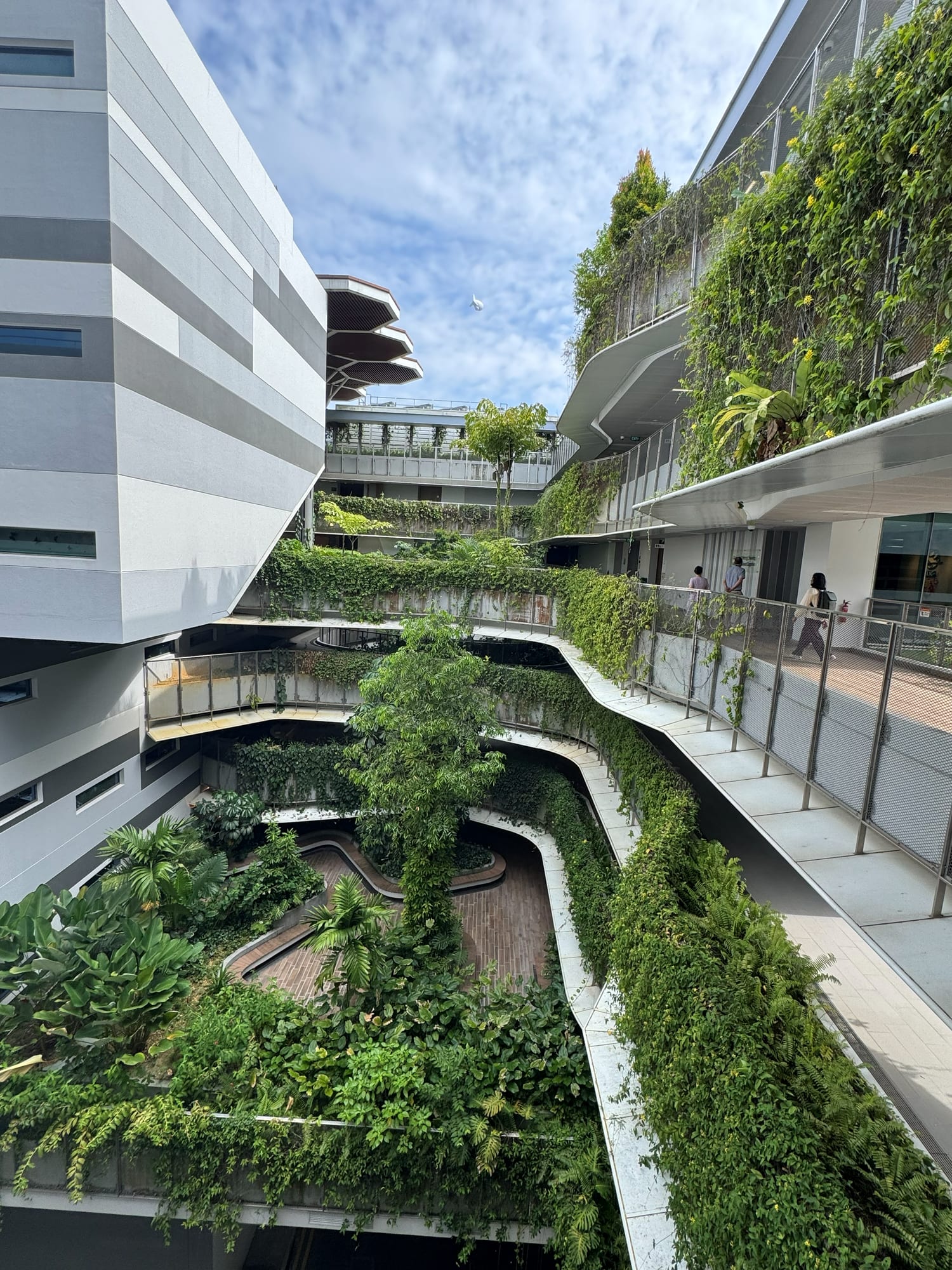
The first two days were at NTU, on a campus full of plant-covered buildings. Monday was a day of talks by NTU professors, on topics ranging from car-lite cities and bus networks optimised with deep reinforcement learning to agentic reinforcement learning, robot perception and navigation, human-centric embodied AI and neural PDE solvers for option pricing, followed by a panel discussion.
Tuesday was for touring NTU's corporate labs, research labs run jointly with companies:
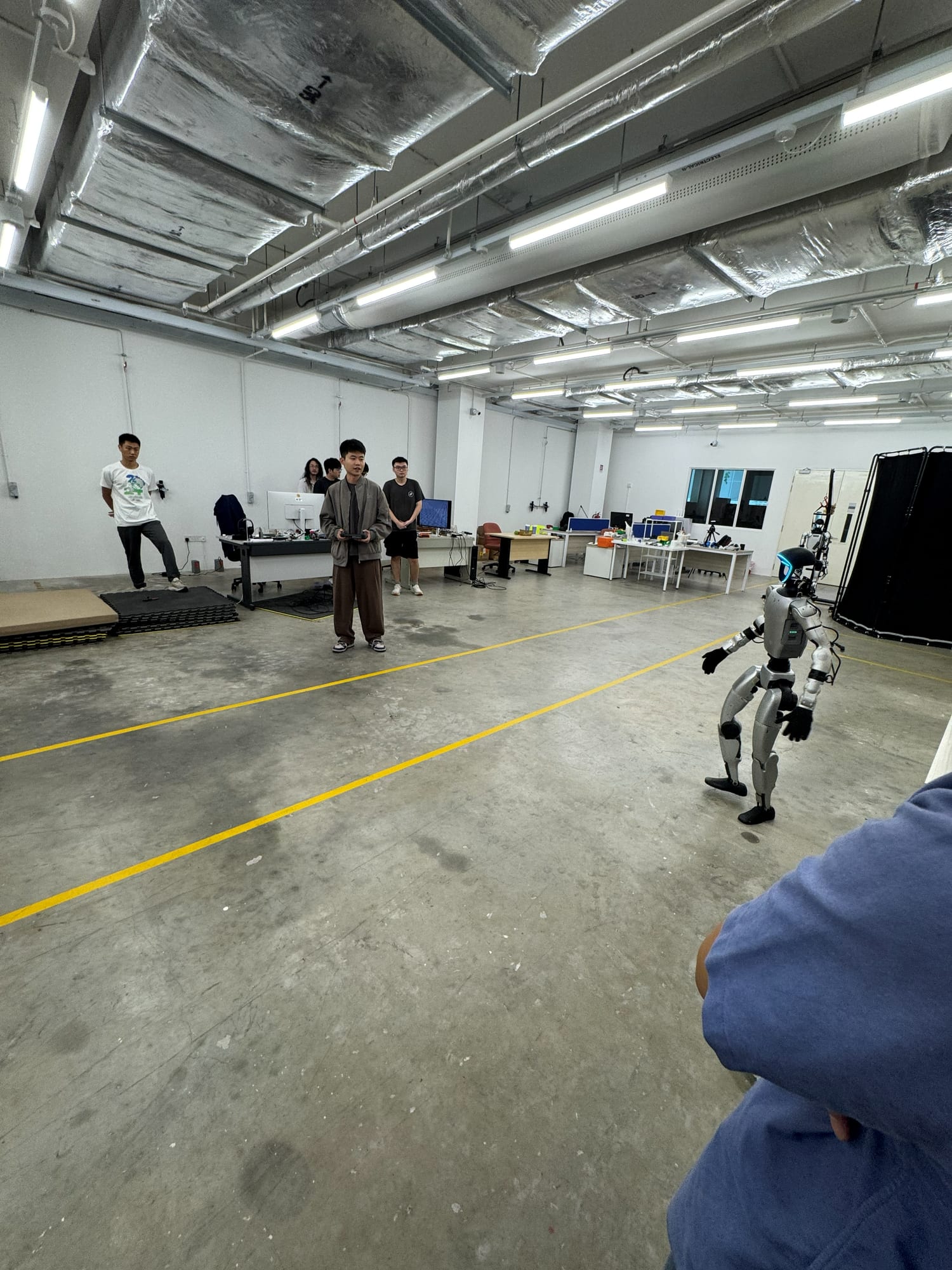
- Schaeffler-NTU Corporate Laboratory, on AI-enabled humanoid and collaborative robots. Besides a walking humanoid, they showed an untethered universal robotic gripper, electronic-skin tactile sensors for robots, and a glove against hand tremor made of 3D-printed chain mail: when it detects a tremor, the chain mail stiffens to keep the hand steady.
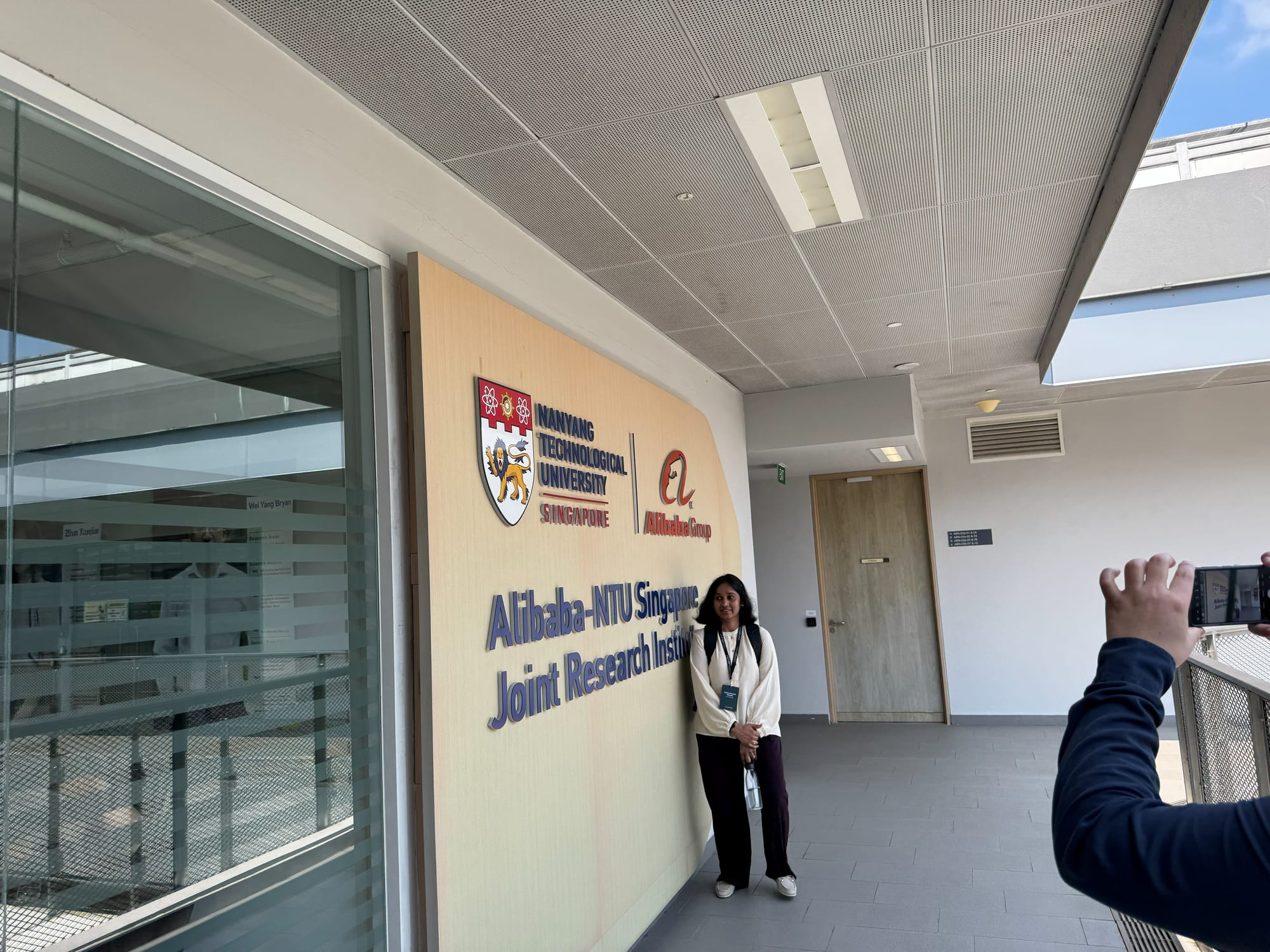
- Alibaba-NTU Global e-Sustainability CorpLab, Alibaba's largest research lab outside China, working on energy-efficient AI, green cloud computing and healthcare. Xuejiao Zhao (NTU and KTH) presented specialist LLMs for medical diagnostics, and we tried exergame demos from the ARISE project, including a fox chasing a rabbit and a knee brace that detects bending.
- Delta-NTU Corporate Laboratory, on autonomous and collaborative robots for manufacturing, intralogistics and hospitals.
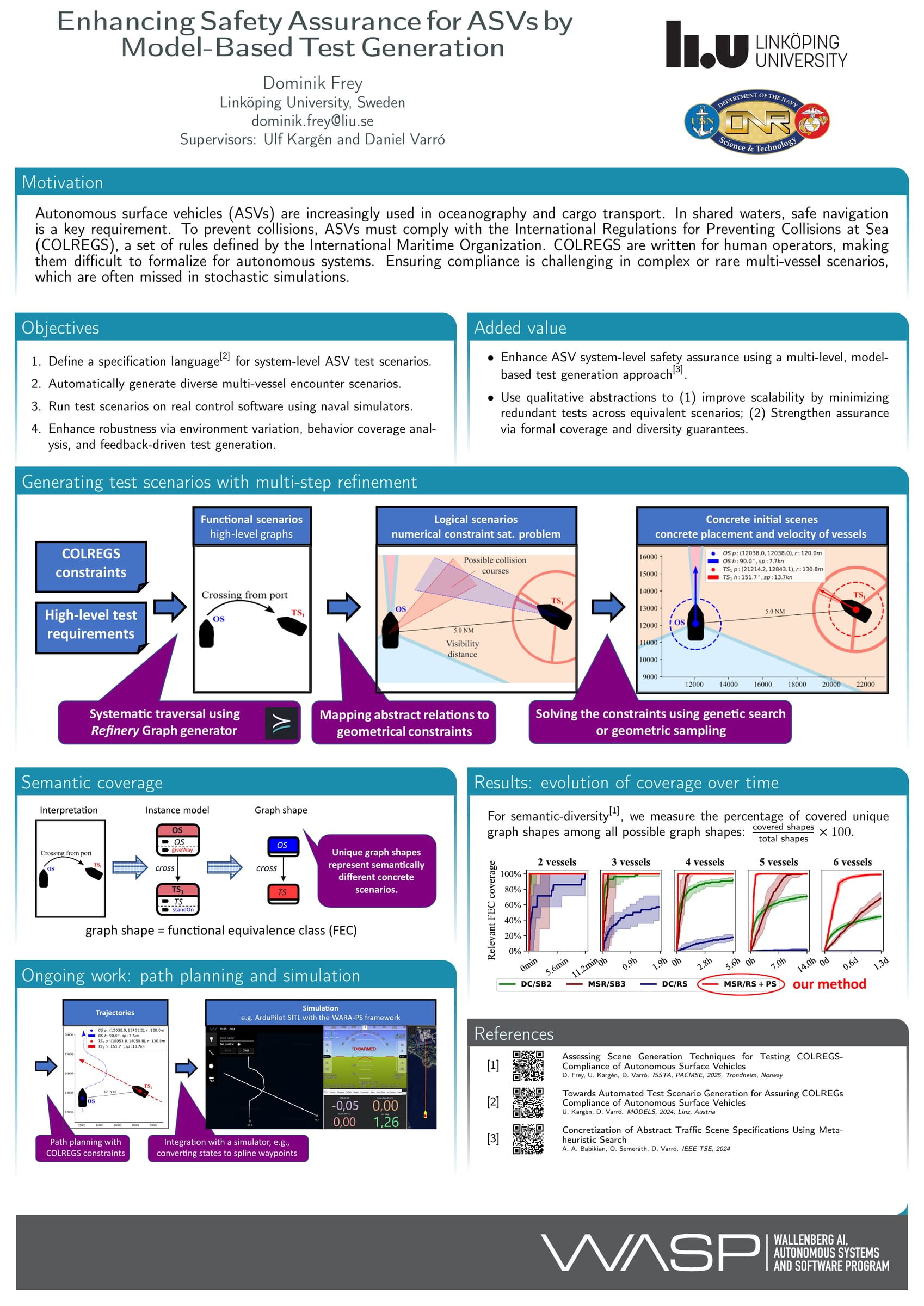
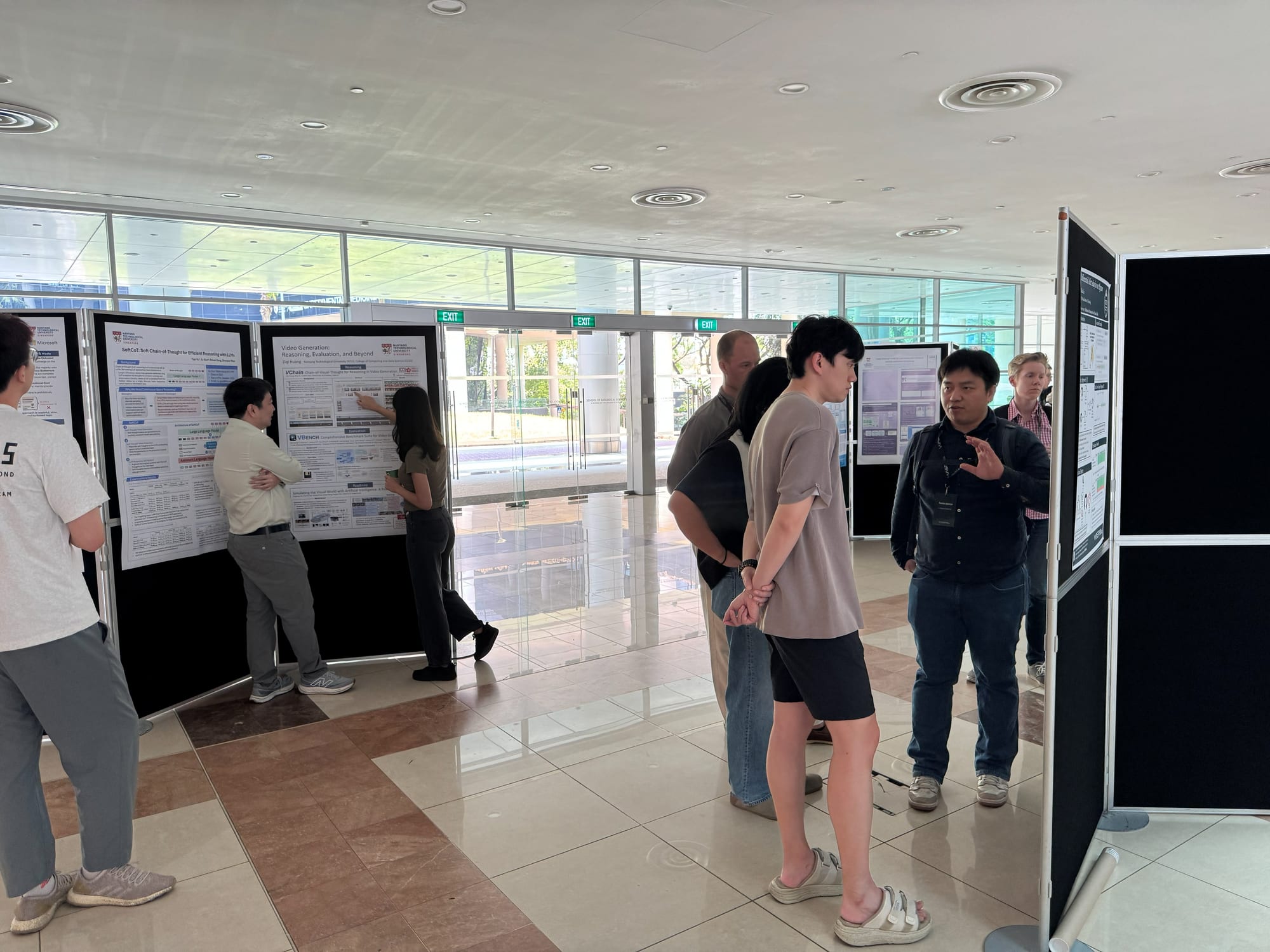
The day ended with a poster and networking session, where I presented my poster Enhancing Safety Assurance for ASVs by Model-Based Test Generation, first shown at the WARA-PS demonstration week 2025. I presented it again at NUS the next day.
National University of Singapore
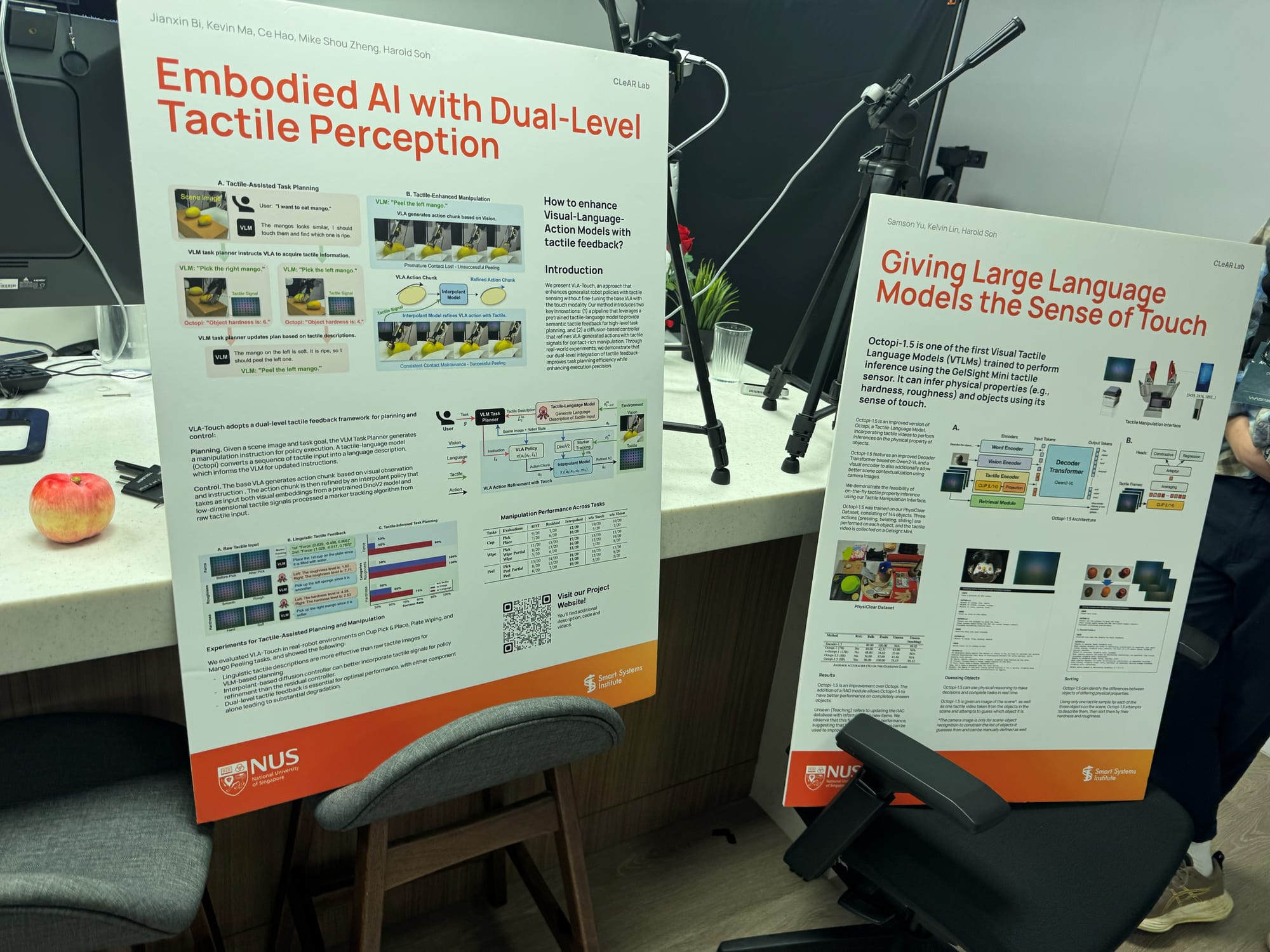
On Wednesday morning we were guests of the NUS AI Lab, with demos from groups working on human-computer interaction (Prof. Suranga Nanayakkara), robotics (Prof. Harold Soh), AI for coding (Prof. Abhik Roychoudhury) and privacy, security and trustworthy AI (Prof. Mohan Kankanhalli). Two things stood out for me:
- At the Smart Systems Institute, CROSS + GeNIE, change-robust online spatial-semantic topological mapping. Inspired by how people find their way, it lets a robot navigate to an object or re-localise itself without a metric SLAM map.
- At the Trustworthy and Secure Software Institute, AutoCodeRover and SpecRover (Haifeng Ruan et al.), LLM agents that navigate a codebase, work out what the code is meant to do and produce high-quality patches. The startup built on them was acquired by Sonar. The institute also presented SPARTAN, a Strategic Platform for Autonomous Resilient and Trusted Agents.
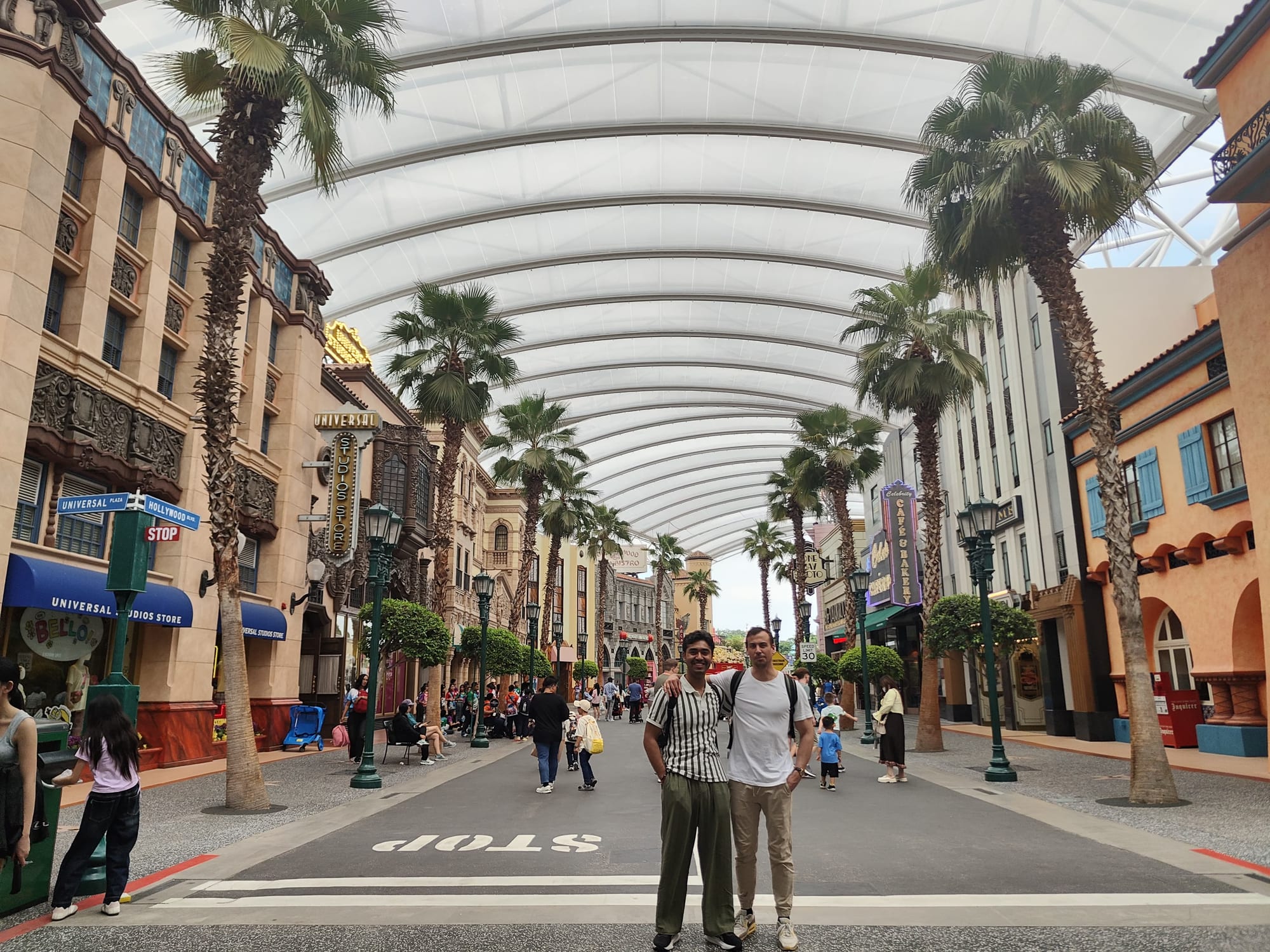
The morning closed with a poster session over lunch, with 17 NUS posters next to the WASP ones. In the afternoon the bus took us to Sentosa Island for some free time.
The port and the Ambassador's Residence
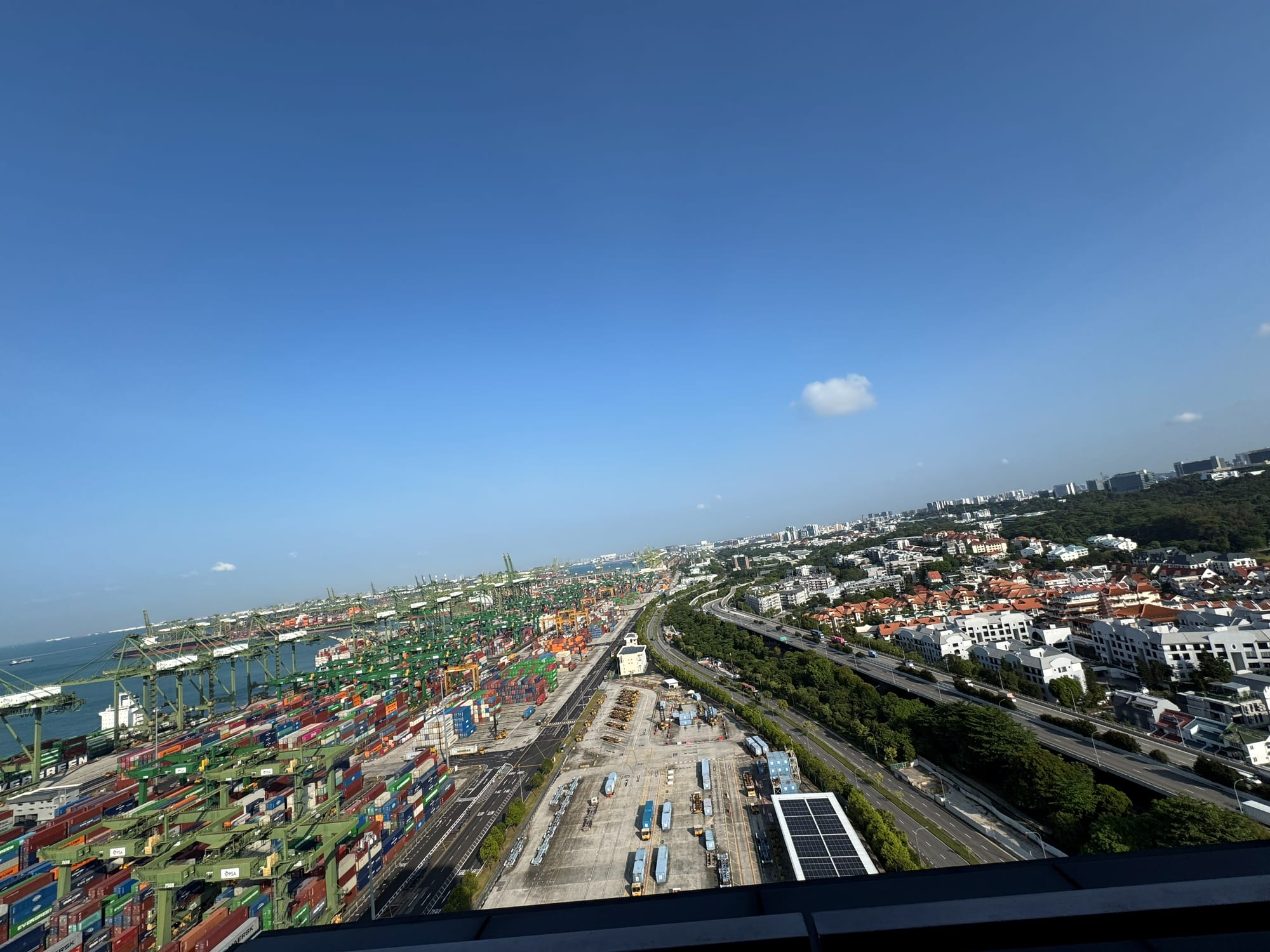
Thursday began at the Port of Singapore Authority (PSA), which operates the world's largest container transshipment hub, handling more than 100 million container units a year. We heard about the new Tuas Mega Port, where operations are automated from quay to yard: quay cranes are operated remotely from a control centre, driverless AGVs carry the containers, and automated yard cranes stack them without human drivers.
After lunch at the Chinatown Complex Food Centre, one of Singapore's hawker centres, the National Robotics Programme (NRP) gave us an overview of the country's robotics landscape.
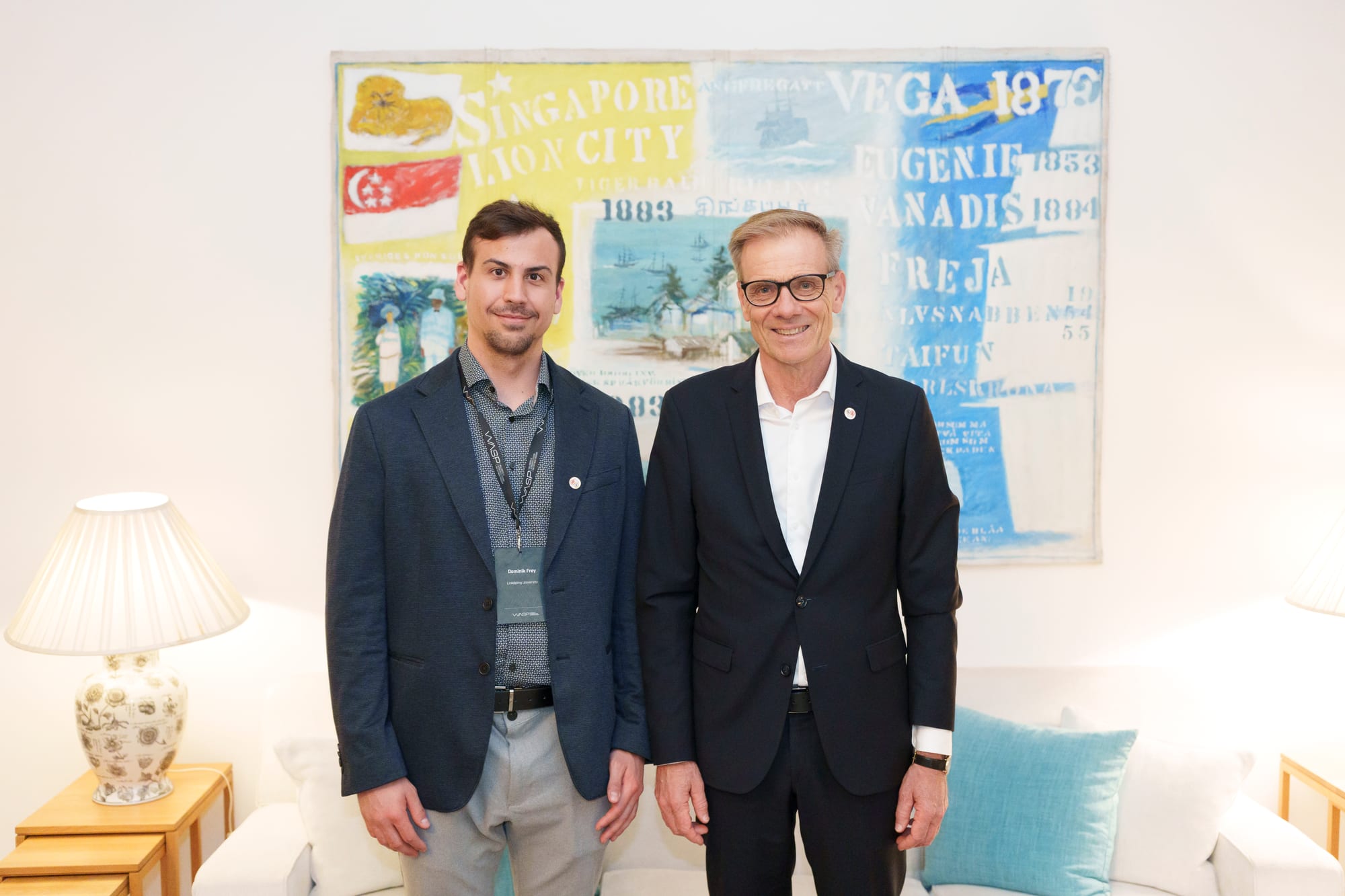
In the evening we were invited to a reception at the Swedish Ambassador's Residence, in the year Sweden and Singapore mark 60 years of diplomatic relations. There I met the Swedish Ambassador to Singapore.
The last day
Friday started at A*STAR's Advanced Remanufacturing and Technology Centre (ARTC), run in partnership with NTU. In the afternoon, Olofsson Consulting gave us a Claude Code workshop, and the week ended with a networking event and reception at Nordic Innovation House / Lorong AI.
Singapore itself
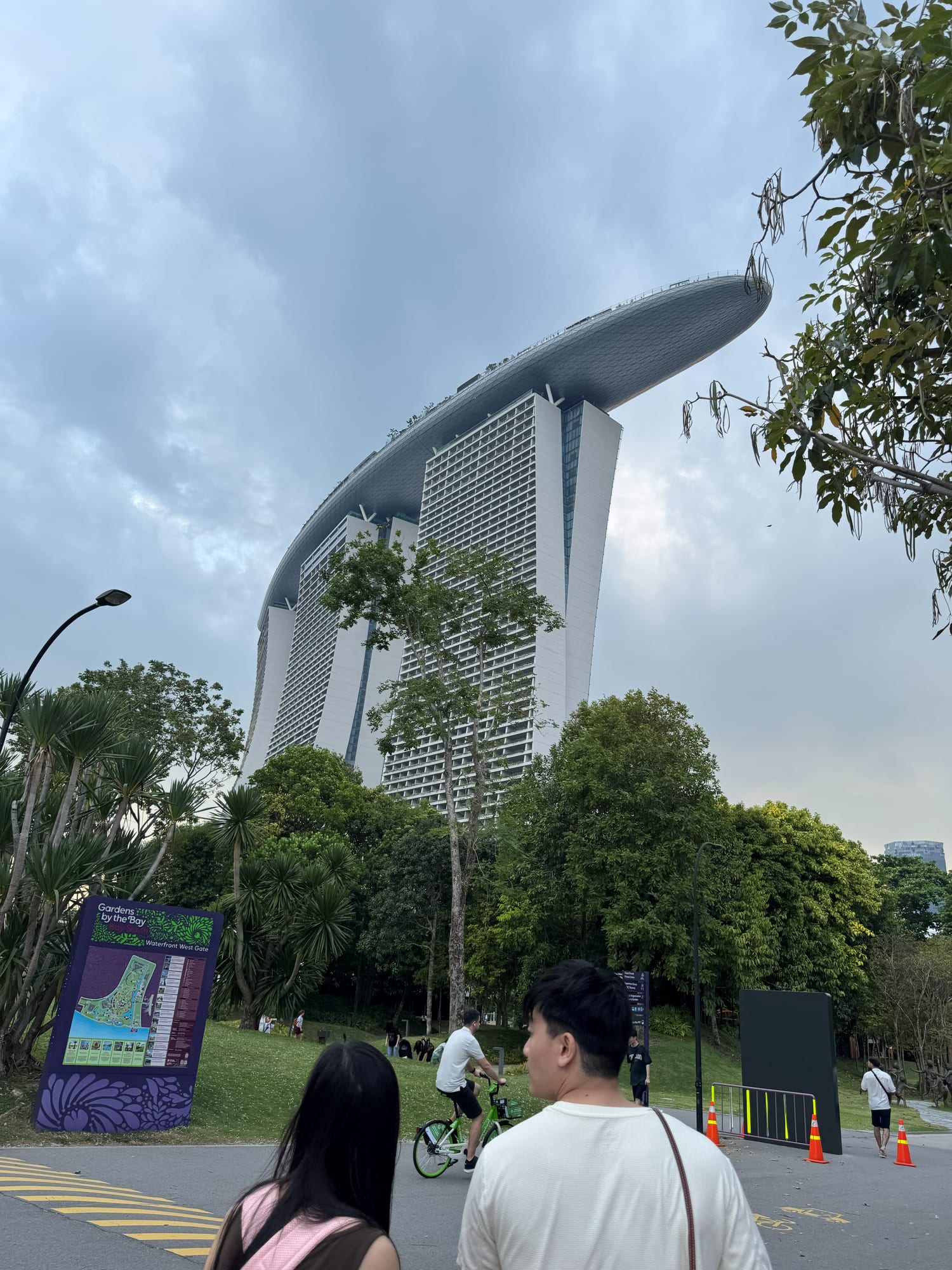
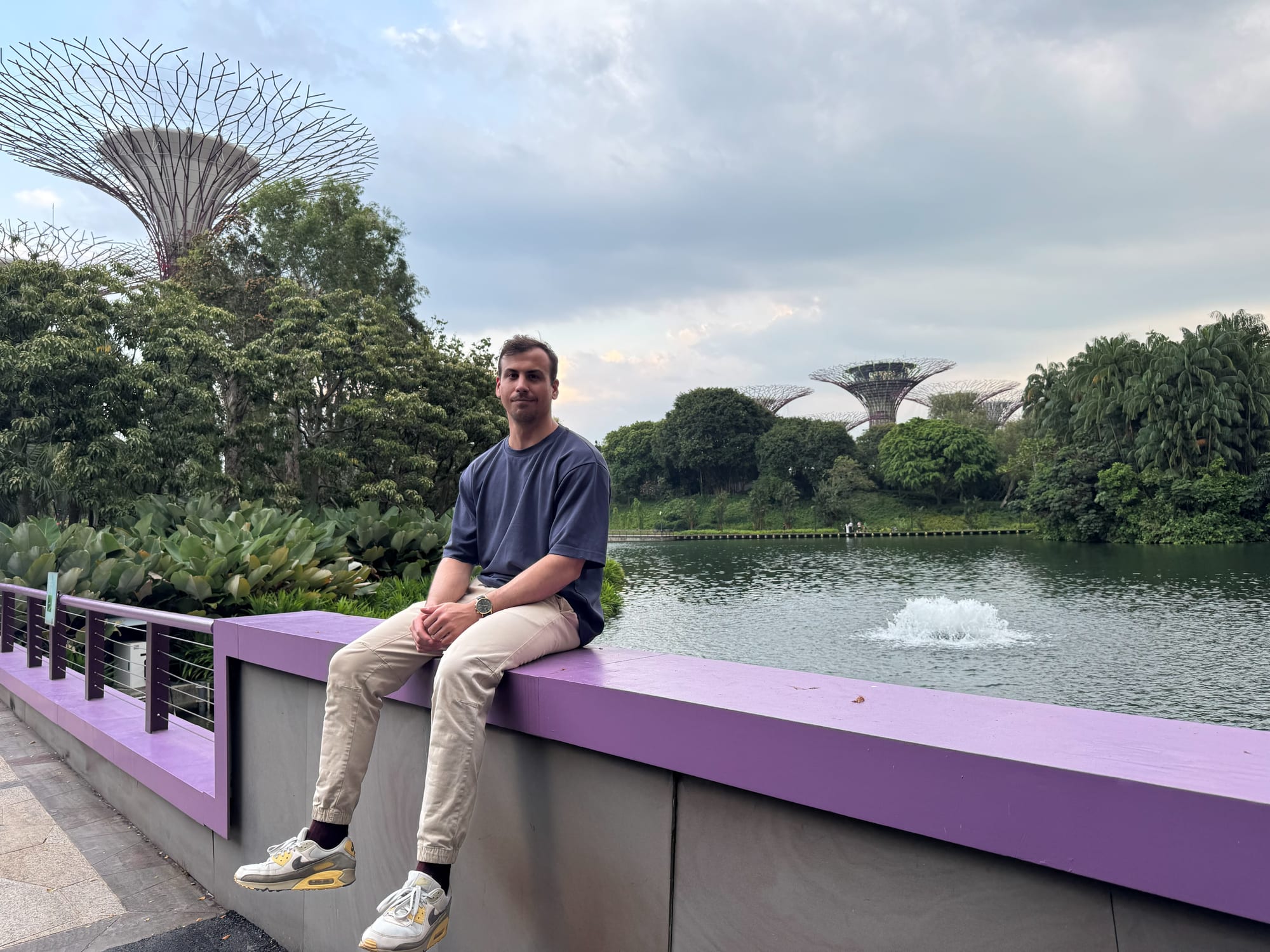
Between the visits, the city made its own impression. Singapore is a city-state of about six million people, independent since 1965, where around 80% of residents live in public housing. It is remarkably green, with roughly one tree per person and plants on balconies and terraces everywhere, and famously strict: chewing gum, vapes and even Swedish snus are banned, with heavy fines. Even the airport, Changi, is worth seeing.
Gallery
NTU campus
Lab visits and poster sessions
Port of Singapore
Reception at the Ambassador's Residence
Around Singapore